
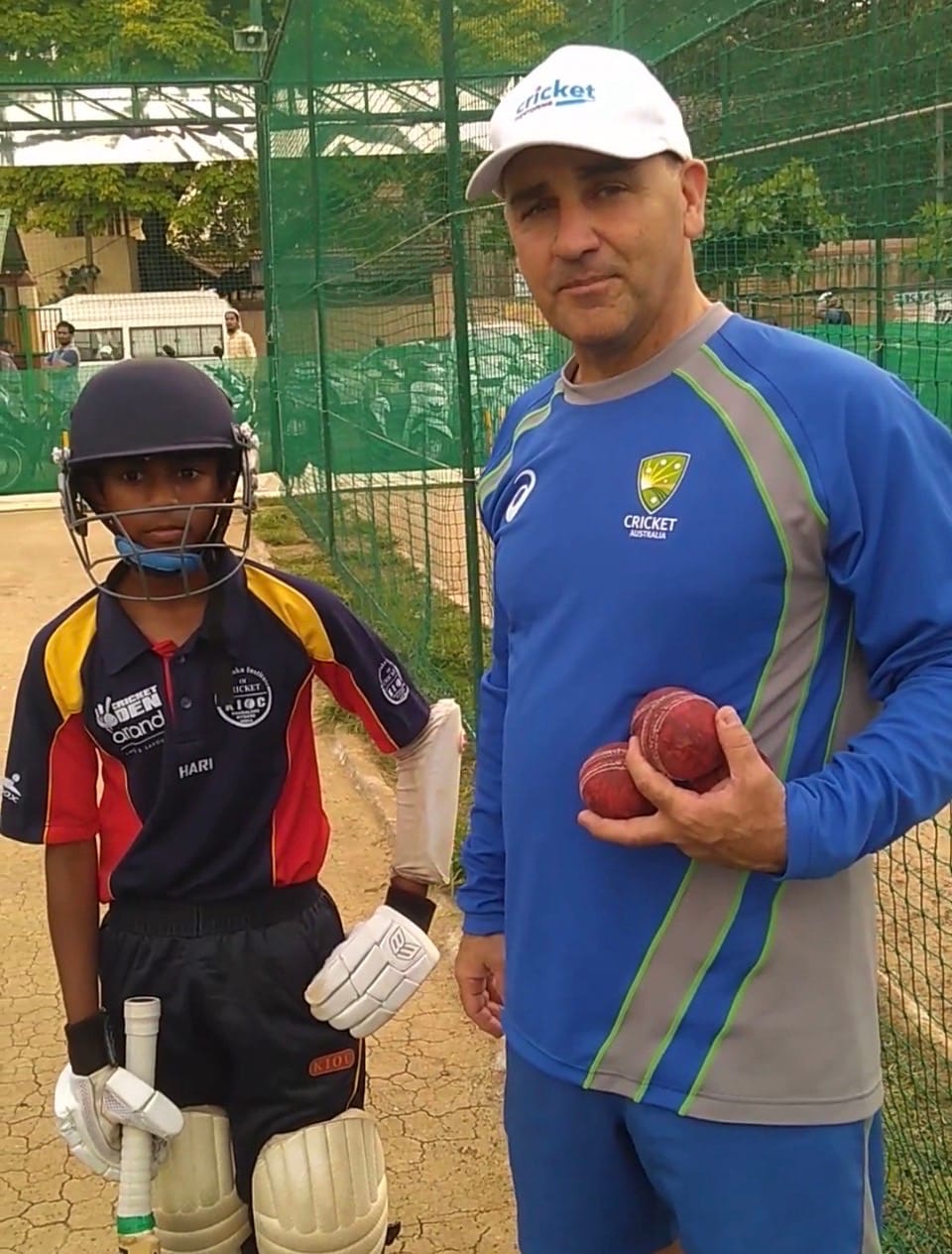
Above the league sits the High Performance International Pathway (HPIP), run with the Karnataka Institute of Cricket (KIOC) in Bengaluru. It is the part of VECL families ask the most questions about, so this post explains what it is, what it is not, and how a player is selected.
What the pathway is
The HPIP is one programme run across two countries: camps at KIOC in Bengaluru, and turf T20 competition in Melbourne. Selected players train at KIOC for eight days each December and each April, and play the VECL December tournament on turf in Melbourne in between. From 2027 a third camp is planned each September, timed to the Victorian school holidays.
This year, the squad leaves Melbourne on 13 December 2026 for eight days at KIOC, running from 13 to 22 December, then comes home for the VECL December tournament, which starts on 24 December.
The point is not the trip. It is that the same group of players is coached, assessed and put into competitive cricket repeatedly across a year, in two sets of conditions, with performances recorded rather than remembered. Players then return into the Australian January block — Dowling Shield, Premier Under 18s and representative trials — having just had eight days of concentrated coaching and match cricket, rather than a month off.
The Karnataka Institute of Cricket
KIOC was founded by Irfan Sait, celebrated its silver jubilee in 2021, and has been developing cricketers for close to three decades. Players coached there include Robin Uthappa, Mayank Agarwal, Manish Pandey and Devdutt Padikkal. We name them because they say something about the academy; they say nothing about where any individual player will end up.
The academy is built for serious cricket: twenty covered nets across four surfaces — cement, turf, artificial turf and matting — bowling machines, floodlights, a gym, an in-house physiotherapist, and video and speed analysis.
KIOC is a separate organisation with its own name and curriculum. This is a partnership: VECL runs the Australian end — selection, the league, the December tournament and the duty of care owed to players travelling from Australia. KIOC runs the Bengaluru end — its facility, its coaching staff and the opposition it arranges.
What a camp week contains
- Coaching by KIOC’s own staff, on their surfaces, rather than by visiting coaches working around them.
- Matches, not just nets, against Indian opposition arranged by KIOC: spin that grips from the first ball, heat, and players who have never seen you bowl.
- Analysis and conditioning: video and speed analysis, strength and conditioning, and the in-house physiotherapist on site through the camp.
- A quality 3–4 star hotel in Bengaluru, with league staff staying alongside the players.
Who leads it
Andrew Walton, Director of the Victorian Elite Cricket League and Director of the HPIP, leads the programme on the Australian side and runs the camps. Andrew is a Cricket Australia Level 3 accredited coach and has worked with Irfan Sait and the KIOC coaching staff since 2013. Irfan Sait and his staff host and coach the camps in Bengaluru.
Who looks after the players
For parents this is the section that matters most, and the arrangements are settled in writing before anyone travels:
- League staff are with the squad at all times — travel, the academy, the hotel, matches and overnight.
- At least one adult for every ten players, and never fewer than two. A female staff member travels whenever girls travel.
- Every adult holds a Working with Children Check, and KIOC coaches are never alone with a player.
- Rooms are shared only by players of the same gender and a similar age, with staff on the same floor and a room check every night.
- A first-aid-qualified staff member is on tour, with a daily update to families and a 24-hour tour-lead number.
Families arrange their own passports, Indian visas and travel insurance; the league can explain how previous tours were arranged but cannot advise on visas or immigration. The full detail is on the HPIP page for parents and in the International Travel Terms.
Who can be selected
The camp squad is chosen from players aged 12 and over: boys and girls, and senior men and women. Around twenty players will be selected.
Selection is through the November try-outs — Wednesday 4 November at Cricket Victoria’s Junction Oval indoor centre in St Kilda, and Monday 9 November at Elite Cricket Academy in Hoppers Crossing, both 7:00pm to 9:00pm. The same trial also picks the December junior franchises, and it is open to anyone aged 9 and over. The try-out costs $20 (inc. GST) and bookings close Sunday 8 November.
Everyone goes through it, including players already with VECL. Seasons played for a franchise do not carry a place in the pathway with them. Players who cannot reach Melbourne for either trial can contact us before the trials to be assessed another way.
What it costs
The programme cost and exactly what it includes are shared in writing with each offer, in the offer email after the try-outs. Nothing beyond the $20 try-out fee is payable until a place is offered and accepted.
What we do not claim
Trying out does not guarantee selection, and selection does not guarantee anything that comes after it. We do not claim the programme leads to representative, professional or franchise cricket.
The programme profile sets out the pathway in full, and the try-outs page is where to book.